Saturday, January 26, 2013

The Importance of Parent-Teacher Conferences


In order to help your child have a successful school year, you need to know what is expected of him/her, academically, from now until the end of the school year. I truly hope that many of you will take advantage of this week’s Parent-Teacher Conferences.  I was a bit surprised that only 30 parents visited campus for our Parent Pop-In Day. I am scheduled to visit my son’s school on Thursday to meet with his teacher, and I wanted to share the following questions, which I will be asking when I visit.

What skills and knowledge will my child be expected to master this year?


·         What will my child learn this year in key subjects like math, science, writing, and social studies?

·         Are there challenging academic standards in place at this school, and how do they compare with those at other school districts?

·         How do you inform students about the academic standards they're expected to meet? What kind of projects and assignments have you planned that will help my child meet higher academic standards?


How will my child be evaluated?


·         What kind of information do you use to evaluate students? How do you know if they're academically ready to move on to the next grade?

·         How are grades determined in your classroom?


What can I do to stay more involved in my child's academic progress?


·         What can I do at home to complement what is happening in the classroom?

·         How can I know on a daily basis what homework has been assigned?

·         How can I support the teacher's efforts in implementing higher academic standards?


How do you accommodate differences in learning?


·         Have you identified the way my child learns best?

·         What if my child has a different learning style and falls behind, or is a fast learner and is bored?
Please remember that all students
will be dismissed
 at 1:00 PM on Wednesday.

Thursday, January 17, 2013

National School Board Recognition Month

National School Board Recognition Month

Congratulations to Durham's Board Member Anna Eastman who was elected president of the HISD Board  of Education today.  We wish her great success in her new post.

Trustee Anna Eastman Elected President of the HISD Board of Education


Trustee Anna Eastman was unanimously elected 2013 president of the Houston Independent School District Board of Education on Thursday.
Eastman, who was elected to the board in 2009, pledged to create an environment of “healthy, spirited, and respectful debate” with a focus on raising the level of academic achievement for all students.  Eastman said she will make a priority of ensuring that more HISD students graduate prepared to succeed in college.
“Thank you to all of my colleagues for your support tonight,” she said.
Eastman holds a bachelor of fine arts degree from the University of Texas, and a master of social work degree from Our Lady of the Lake University.  She and her husband, Brad, have three children in HISD schools.
Ms. Eastman thanked 2012 President Michael Lunceford for leading the board through the largest successful bond election in Texas history, and for helping the board strengthen its ethics policy.
Other school board officers for 2013 are First Vice President Juliet Stipeche, Second Vice President Manuel Rodriguez Jr., Secretary Rhonda Skillern-Jones, and Assistant Secretary Michael Lunceford.
HISD Communications | January 17, 2013 @ 6:15 pm at 6:15 pm | Categories: Board of Education | URL: http://wp.me/p22HL1-1bw

Sunday, January 13, 2013

...and the winner is...


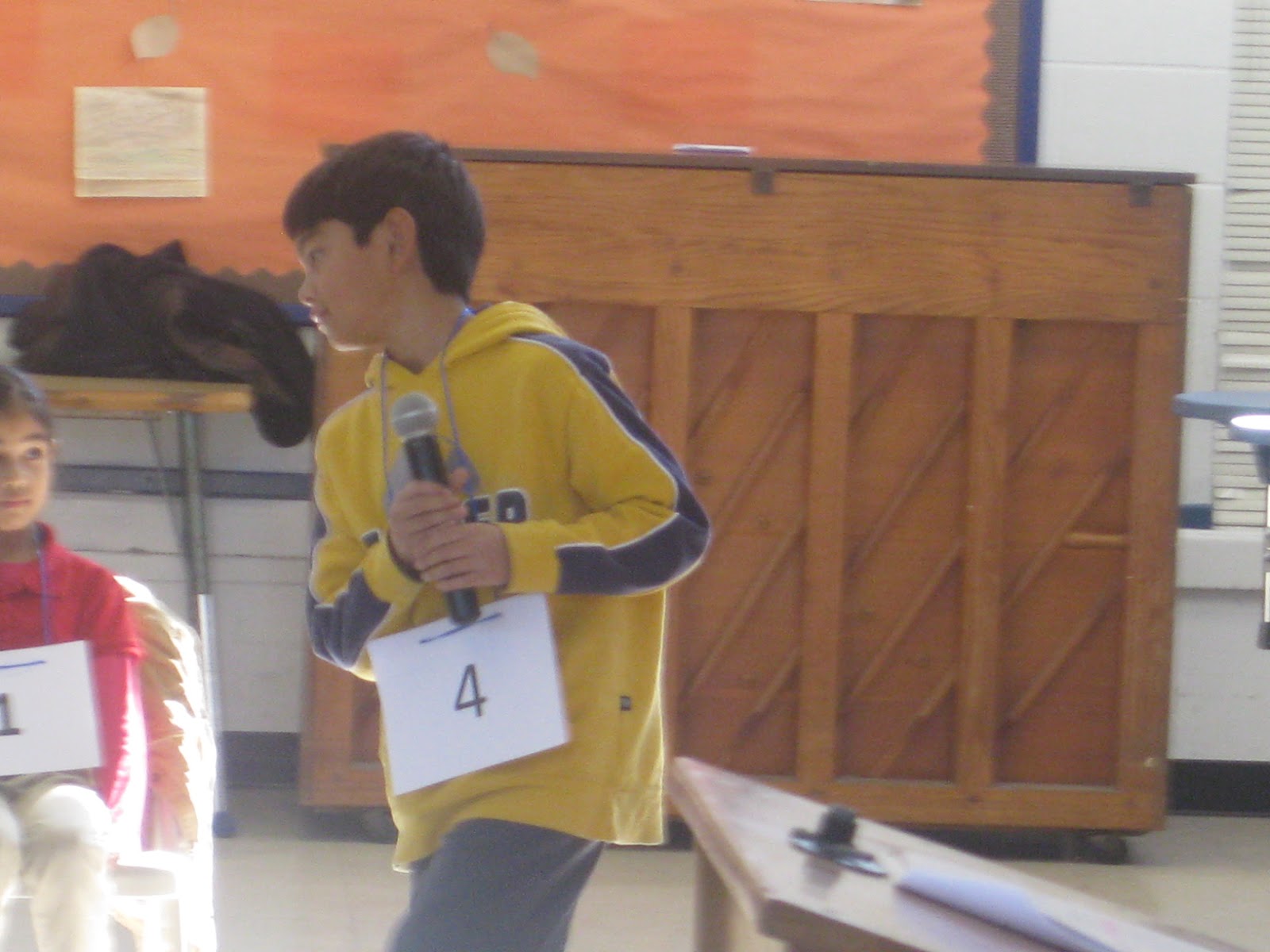
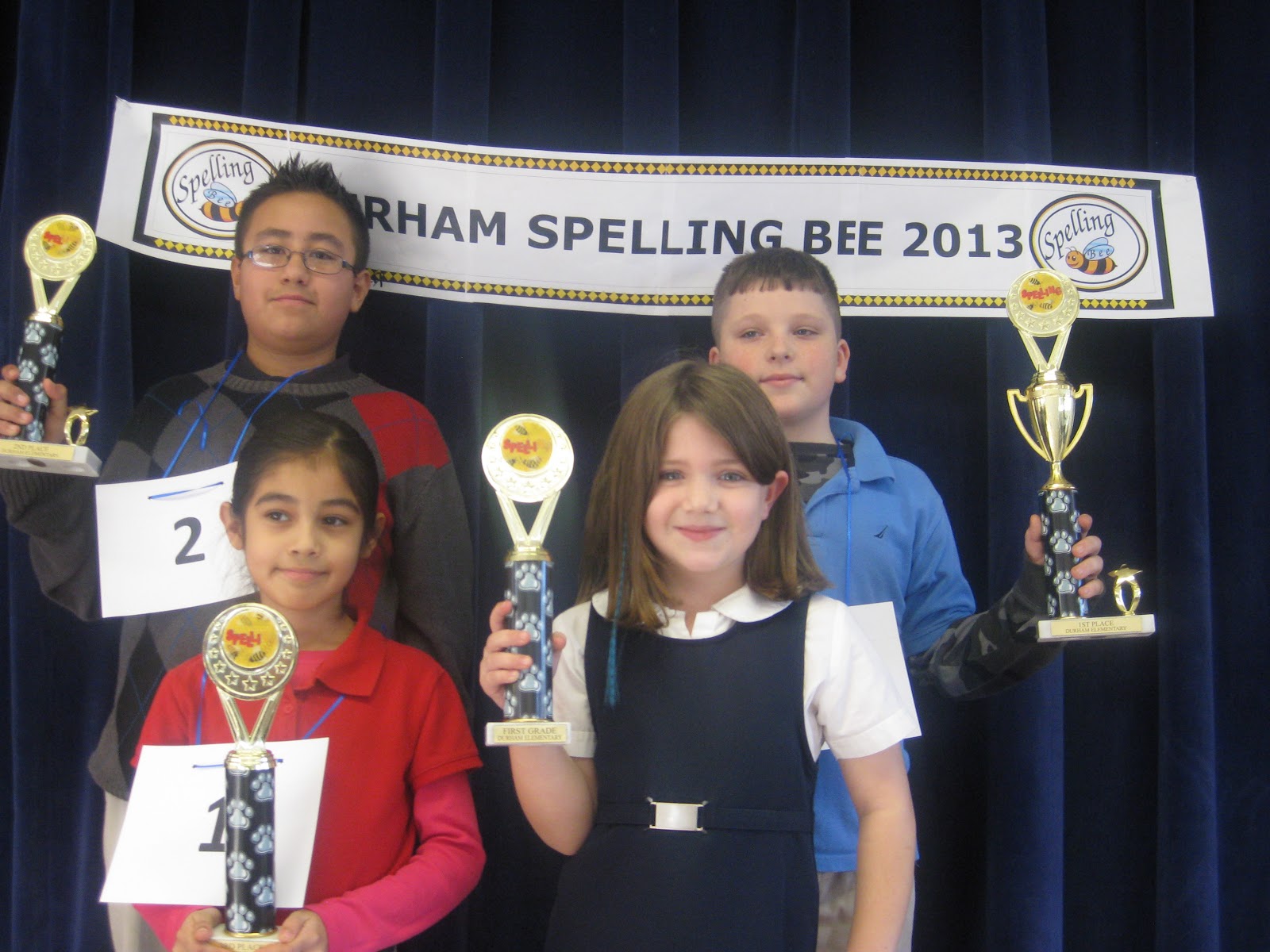
Last Thursday we conducted our school-wide Spelling Bee.  Thanks to Ms. Williams and her team, Ms. Jones (announcer), Ms. Moan, Ms. Welker, and Ms. Anderson (judges) the event was a great way to kick-off our week back to school. 

I must extend congratulations to fifth grader, Garrett Saulnier from Ms. Brame's class. Garrett will represent Durham at the district spelling bee.  In the event that Garrett cannot make it, our first runner-up, Alejandro Ortiz Escoto from Mr. Lister's class will represent us. I am super proud of you both.   I am also very proud of our budding spellers who were the grade-level winners in 1st and 2nd grades; they attended to see what is in store for them if they continue on their current path.


Through the years, I have noticed that great spellers are avid readers.  I am struggling with finding the time to read as much as I used to, I wonder why, but know that it is a must for the new year.  I do not usually make resolutions, for fear of not living up to my own expectations, but I am committing to reading more this year.

My Reading Commitments for 2013 are:


1. Use Goodreads to track my reading.  I've been convinced by Donalyn Miller to use Goodreads to track my books, keep a to-read list, and connect with others on books I'm reading. I spent time today exploring this site and can already feel a blog post coming on about how neat it is!
2. Have family "Read-to-Self" time with my kids. Read-to-Self is one of the components of Daily5 that I would like to introduce at Durham next year.  This will be a chunk of time (at least 10-15 minutes, because that's what they can handle right now) that they can read whatever they want (not to me) while I also read myself.  This will be a win-win for all of us! (I realize I did say kids plural--I'm hoping that 2 year-old Sawyer can be focused that long looking at books or listening to books on the iPad).
3. Read 1 professional book a month. I will probably end up reading more, but I want to focus on reading more fiction so I'm not so boring!
4. Read 280 books. I'm not as crazy as I sound, I swear!  As I was exploring Goodreads today, my son thought it was cool and asked if we could keep track of the books I read to him (and his brothers) on there too, so out of the 280 goal, I expect 225 to be for picture books and 55 to be for novels, professional books, and kids' chapter books.

What can you commit to this year?  Start small and build upon your successes.  Remember that a home without books is like a house without windows. 


Thursday, January 10, 2013

Happy 2013!

Happy New Year!  I hope that each of you had the opportunity to spend time with your loved ones during the holiday season.  We ended the year with many exciting activities.  The students and staff had a joyous time at the winter performances and school dance, and took full advantage of our Polar Express Day when they wore their comfiest PJs to school.


It is hard to believe that the school year is almost at the midway point.  The beginning of a new year always serves as a great opportunity to reflect on what is working well, and what needs to be improved upon.  I employ you to continue to have meaningful conversations with your children every day.  Take stock of how your child is doing in school.  Report cards will be distributed tomorrow.  To see if you have a good idea on how well your child is doing, answer the following questions yes or no:
1.      Do you talk with your child about graded tests and projects when she brings them home?
2.      Do you ask your child to talk about why he thinks he received a grade and what he has learned – whether it’s a good grade or a grade in need of improvement?
3.      Do you contact your child’s teacher to learn what is going on if your child has a problem with a subject?
4.      Do you check your child’s report card, paying attention to conduct and behavior grades as well as academic grades?
5.      Do you review your child’s test results with the teacher?
How did you do?  Each yes answer means that you are keeping up with your child’s progress in school.  Children’s school success starts at home – and kids’ attitudes about school start there as well.  What you say can influence how your child feels, so speak positively about your child’s teacher.  If you have a problem or concern, make an appointment to meet with your child’s teacher rather than speaking negatively at home.  After all, you both have the same goal in mind: your child’s success.
This month, resolve to get involved with your child’s academic success.  On Thursday, January 24th, we will host our first Parent Pop-in Day.  Parents will have the opportunity to visit their child’s classroom and spend some time observing the learning taking place.  On Wednesday, January 30th, the afternoon will be dedicated to Parent-Teacher Conferences.  Please carve out time to take advantage of both opportunities.
George Santayana said, “A child educated only at school is an uneducated child.”  You are an integral part of your child’s experiences, so let’s work toward making this year the best year ever for every child at Durham.

Sunday, December 16, 2012

Safety Above All Else


Like so many of you this weekend, I spent time with my son explaining the unexplainable.  I literally put work on pause and spent time with my sons, for with every tragedy, we are reminded that life is indeed short. 

Hunter, my eldest, is five, and was the only one of my three sons who made a connection to the horror that occurred. I would like you to share with your children what I shared with him - school is a safe place.  In speaking with your kiddos, highlight the security features that are in place at our school.  Help them understand that there is a plan in place, and their teachers will be there to help them if ever there is an emergency on our campus. 

Older children need to understand that even though these occurrences are unfortunately happening more often, they are still rare. Encourage your children to promote a sense of community in the school, and have them watch out for others in the school. Most importantly, continue your regular schedule and allow your child to come to school this week.

For additional suggestions, please visit:
  •  PBS has an article with flexible suggestions for answering kids' questions about the news, and the Substance Abuse and Mental Health Services Administration (SAMHSA) also has tips for students, schools, adults, families, responders and health professionals in dealing with tragedies: 


On behalf of Durham Elementary School, I extend our sincerest sympathy and love to all who may been affected personally by this event both directly or indirectly.  

As always, please do not hesitate to contact me if you have any questions.

Thursday, December 13, 2012

Schools of Thought

5 things teachers want parents to know

By Carl Azuz, CNN
(CNN) - During the average school day, teachers are with children as many waking hours as parents are. But many educators believe there’s a short in the communication lines between themselves and parents. When asked what they’d want parents to know about education, not all of the teachers we spoke to wished to be named - but they did share many common concerns from the classroom.

1. We're on the same team
First and foremost, teachers want students to thrive in the classroom, and they could use your help.
Jennifer Bell, a 7th grade social studies teacher in Tennessee, suggests that parents do all they can to ensure that students are doing their homework, exercising, eating well and sleeping. Whether students come to class tired or ready to learn can hinge on parents’ involvement. “We need their support,” she says. “We can’t do this on our own.”
In the words of an elementary school teacher from Georgia, “We are professionals. Teaching children is our area of expertise. Your child benefits more when you support me.”
And while educators expect students to make mistakes, Mississippi teacher Beth Wilbanks Smith asks parents to help them learn from those mistakes. “They will grow to be productive citizens if we all work as a unified force,” she writes.


2. Curriculum isn’t always up to us
One aspect of education that teachers say many parents don’t realize is that there’s not much wiggle room in classroom curriculum.
Forty-five states have adopted The Common Core State Standards. As a result, Bell says that teachers aren’t always responsible for the pace or the material. What they are responsible for: teaching the material itself and the test scores that result.
Parents may not agree with the education guidelines set by state or federal government, and many teachers don’t either. A Georgia educator told us, “Legislators and politicians are not educators; they make decisions regarding education without the knowledge of how it will impact student learning.”
So teachers ask that parents show understanding when addressing issues that educators do not have the power to change.

3. Share the responsibility
Something educators don’t want is for parents to have a combative approach to problems that arise at school.
A pair of Georgia elementary school teachers said that a student tells his side of the story through his own point of view. In order to get the whole story and avoid any misunderstandings, it’s important to objectively approach the educator.
A junior high school teacher from Missouri echoes this. “The national rhetoric lately in politics, movies, etc. has really put teachers on the defensive, and I think parents today are more likely to try and place blame on a teacher instead of ask their student to take more responsibility.”
This educator suggests allowing the student to both fail and take the responsibility to correct the error. “As a parent, I know this isn’t easy, but always trying to jump in and save your student won’t help them in the future.”

4. A track record doesn't guarantee a track star
“Something that has come up in conversations often lately among teachers: Past results don’t always result in future success,” writes a Missouri educator.
Teachers sometimes hear parents say that their student has always done well in a given subject, so there’s no reason why he or she should have trouble with it going forward.
But that’s not always the case, and it’s not necessarily the teacher’s fault. “This year’s concepts are very different,” the educator says, and the student “might be struggling with a more advanced concept.”

5. We know where you’re coming from
A recently retired Georgia teacher told us that 80-85% of her colleagues had children of their own. She says this gives educators compassion and insight into how a child learns. “Parents see a child. Teachers see both the child and the student. They have the ability to see multiple perspectives.”
When discussing success in the classroom, Smith also mentioned compassion as an ingredient, along with structure, order and inspiration. The recipe “makes for a dynamic environment,” she said. “I am not ‘a friend’ to my students, but I am their mentor, their confidant, and their stability while they are in my care.”
And while virtually all teachers would like to give more individualized attention to students, educators are limited by time, curriculum and class sizes. These are challenges that teachers feel some parents don’t understand.
As stated by a woman with decades of experience as both a teacher and a parent, “Your child is unique, just like everyone else’s.”

To read more about the power of parents in public school, visit http://schoolsofthought.blogs.cnn.com/2012/10/04/the-power-of-parents-in-a-public-school/.

Thursday, December 6, 2012

Curriculum Night

‘Tis the season for learning and having fun!  Almost 120 families attended Curriculum Night and participated in hands-on activities while learning how to support their children by doing simple activities at home.
I would be remiss if I did not express my sincere gratitude to all of the parents who took the time to come out and participate.  As students came back to share the passport stamps they collected on their journey through the stations, they shared their favorite activities of the night: riding the blender bike in PE, beating their parents in I Declare War at the math station, painting Mandarin Chinese characters with Ms. Shay, making bookmarks in the library, creating crossword puzzles in computers, and investigating how much force is needed to launch a marshmallow 15 feet into the air in the science lab.


I truly appreciated the parents’ acknowledgement that the experience tonight heightened their awareness of the many different activities that they can do at home to support their children’s education.  Here are some additional things that you can do at home:
·         Save your seeds the next time you eat a piece of fruit! Try planting them indoors in a zip lock bag or clear cup and measure how tall they grow. Be sure to transplant them into the ground as the plant grows.
·         Practice measuring things around the house.  Use tape measures, yard sticks, rulers, meter sticks, gallon jugs, quart bottles, measuring cups, food scales, etc. Let your child help you cook a meal or a batch of cookies.  Ask them to double the recipe, cut it in half, etc. Let them discover that 1/2 cup is equal to 2/4 cup. 
·         If you can’t go for a walk or a bike ride…..jump rope!  Jumping rope is a perfect way to burn calories and increase cardiovascular endurance!  Jump ropes are inexpensive and can be found at the dollar store.  Children who remain active are more receptive in class.
·         Find the reading and writing in everyday things. Take the time to show your child ways that adults use reading and writing every day.

I hope that you will all continue to remain involved in your child’s learning as the year progresses. In a recent study, researchers established that family participation in education was twice as predictive of students’ academic success as family socioeconomic status. The earlier in a child’s educational process parent involvement begins, the more powerful the effects.  Additionally, I want to share with you that the most consistent predictors of children’s academic achievement and social adjustment are parent expectations of the child’s academic attainment and satisfaction with their child’s education at school. 

On behalf of our dedicated teachers, thank you again for coming out to support Curriculum Night.


Save the date for our Fine Arts Night Thursday, February 28, 2013